
 By Yuvrajsinh Vaghela
Contents
Front-end development is evolving faster than ever and what worked yesterday may already feel outdated today. From shifting user expectations to rapid advances in tooling, performance standards, and AI-driven workflows, the modern web demands more than just clean code. It requires strategic thinking, speed, and adaptability.
For developers, staying aligned with emerging front-end technologies means building scalable, high-performing interfaces that users love. For business leaders, it means delivering digital experiences that convert, engage, and retain customers in an increasingly competitive landscape.
At Monocubed, a front-end development company known for building fast, responsive, and user-centric web solutions leveraging modern frameworks like React, Angular, and Vue, we turn trends into tangible results. From performance-first SPAs to accessibility-compliant and SEO-optimized UIs, our approach blends future-ready tech with real-world business goals.
For example, in our interior design consulting platform project, our team worked closely with the client to architect a dynamic marketplace that enabled homeowners to discover, chat with, and book professional designers—all from a seamless, responsive web interface.
In this guide, we break down the most influential recent trends in frontend development and latest technologies shaping the future of web applications. From AI-assisted development and next-gen frameworks to performance engineering and accessibility-first design, you’ll discover what truly matters and how to leverage it to build faster, smarter, and more impactful web experiences.
15 Latest Trends in Front-End Development to Follow This Year
Here are the top 15 front-end development trends that every developer and business should keep an eye on. It helps you decide the state of frontend of your web platform and what to update to make it more intuitive and interactive.
1. AI-powered development tools
Artificial intelligence has quickly become a core part of the modern front-end development workflow. According to the 2025 Stack Overflow Developer Survey, over 76% of developers now use or plan to use AI-powered coding tools in their daily work.
Next-generation frontend technologies and tools like GitHub Copilot, Cursor, and Amazon CodeWhisperer have moved well beyond the experimental stage. They now serve as true frontend development partners that assist with code generation, debugging, and refactoring. Here is how AI is impacting front-end development.
Intelligent code completion
AI assistants analyze your codebase context and suggest entire functions, component structures, and boilerplate code. This can reduce repetitive tasks by up to 55% according to GitHub research. ( Source: Github Insights)
Automated bug detection
AI-powered linting and code review tools can identify potential bugs, security vulnerabilities, and performance bottlenecks before they reach production.
Design-to-code conversion
This emerging frontend design trend can now convert Figma designs directly into clean React or Vue components, bridging the gap between design and development teams.
Limitations to keep in mind
While AI tools boost productivity, successful integration still requires skilled developers who can provide oversight. Start with routine tasks and gradually expand delegation as you build confidence in the outputs.
Teams that integrate AI assistants into their workflow report 30-40% faster development cycles, making this one of the most impactful front end development technologies and trends.
Now that we have covered AI-powered tools, let us look at another trend that has become non-negotiable for modern front end development projects — TypeScript.
2. TypeScript as the industry standard
TypeScript has moved beyond being a “nice-to-have” and is now the practical standard for front-end development. According to the State of JavaScript 2024 survey, TypeScript usage among front-end developers exceeds 80%.
Here are some key points related to TypeScript adoption.
Type safety at scale
TypeScript’s static type system catches errors at compile time rather than runtime. Research from Microsoft suggests this can reduce production bugs by up to 15%.
Framework-first support
Every major front-end framework — React, Angular, Vue, Svelte, and Next.js — now offers first-class TypeScript support. Angular has been TypeScript-native since inception, and React’s ecosystem has fully embraced it.
Better developer experience
TypeScript enables superior IDE autocomplete, inline documentation, and refactoring capabilities, making large codebases significantly easier to maintain.
Hiring and team productivity
TypeScript knowledge is now listed as a requirement in over 70% of front-end job postings, making it an essential skill for any front-end developer.
Having said that, writing type-safe code is only half the story. Let us now explore how performance optimization has become a top priority through Core Web Vitals and one of the frontend web development trends.
3. Core Web Vitals and performance optimization
Google’s Core Web Vitals continue to be a critical ranking factor, and the metrics have evolved. The biggest change is that Interaction to Next Paint (INP) has officially replaced First Input Delay (FID) as of March 2024.
Here are the three Core Web Vitals every front-end developer must optimize for.
| Metric | What it measures | Good threshold |
|---|---|---|
| LCP (Largest Contentful Paint) | Loading performance | ≤ 2.5 seconds |
| INP (Interaction to Next Paint) | Responsiveness | ≤ 200 milliseconds |
| CLS (Cumulative Layout Shift) | Visual stability | ≤ 0.1 |
INP optimization
INP measures the time between a user interaction (click, tap, keypress) and the next visual update. You can optimize this by breaking up long JavaScript tasks, using requestIdleCallback, and deferring non-critical scripts.
Image optimization
Use modern formats like WebP and AVIF, implement lazy loading with the loading=”lazy” attribute, and serve responsive images with srcset to improve LCP.
Bundle size reduction
Leverage tree-shaking, code splitting, and dynamic imports to reduce your initial JavaScript payload. Tools like Lighthouse and WebPageTest can help identify bottlenecks.
Server-Side Rendering (SSR) and streaming
Modern frameworks like Next.js and Remix support streaming SSR, which sends HTML to the browser incrementally. This significantly improves perceived load times, making it a future of front end web development.
Want to Develop a High-Performance Web App?
Talk to our team to help you build fast, optimized web applications. Our front-end development team specializes in creating performance-first web solutions.
Now let us move to the next, which covers how front-end frameworks have evolved and what options for enterprise-grade web application development.
4. Modern front-end frameworks evolution
The front-end framework landscape in 2026 is more mature and diverse than ever. Choosing the right framework is one of the most important decisions when investing in professional web app development services. Here is where the major players stand.
| Framework | Key strength | Best for |
|---|---|---|
| React 19+ | React Compiler, Server Components | Large-scale apps, ecosystem |
| Next.js 15 | Full-stack, App Router, edge runtime | Production-ready web apps |
| Vue 3 | Composition API, gentle learning curve | Progressive adoption |
| Svelte 5 | Runes reactivity, zero virtual DOM | Performance-critical apps |
| Astro | Content-first, partial hydration | Content websites, blogs |
| Qwik | Resumability, O(1) loading | Instant-load applications |
React Compiler
The new React Compiler (formerly React Forget) automatically optimizes re-renders without manual useMemo and useCallback calls. This eliminates a major source of performance overhead for React developers.
The meta-framework era
Developers increasingly use meta-frameworks like Next.js, Nuxt, and SvelteKit rather than bare frameworks. These provide routing, SSR, API routes, and deployment patterns out of the box.
Island architecture
Frameworks like Astro and Fresh use “island architecture” — shipping zero JavaScript by default and only hydrating interactive components. This dramatically improves performance for content-heavy sites.
Choose based on needs, not hype
The best framework is the one that fits your project constraints, team expertise, and performance requirements. If you need help deciding, check out our detailed guide on the top front-end frameworks.
With frameworks sorted, let us shift our focus to a fundamental practice that continues to create responsive web design.
5. Responsive web design and mobile-first approach
Responsive web design remains a cornerstone of modern front-end web development. With mobile devices accounting for over 59% of global web traffic (Statcounter, 2025), a mobile-first approach is non-negotiable. Here are some key points to consider.
Monocubed uses these practices in delivering the best web designs to the clients and creating responsive, interactive platforms that improve user engagement and seamless navigation.
Mobile-first approach
Start by designing for mobile devices and then scale up for larger screens. This aligns with Google’s mobile-first indexing, which prioritizes mobile-friendly websites in search rankings.
Container queries
CSS Container Queries are now supported in all major browsers. They allow components to respond to their parent container’s size rather than the viewport — a game-changer for reusable component design.
Flexible grid layouts
Use CSS Grid and Flexbox to create responsive layouts that adapt to screen dimensions without relying on heavy CSS frameworks.
Fluid typography
Use CSS clamp() for font sizes that scale smoothly across screen sizes:
Next, let us explore how Progressive Web Apps development is taking responsive design even further by offering native app-like experiences right in the browser.
6. Progressive web apps (PWAs)
Progressive Web Apps (PWAs) have reached maturity and its global market is expected to surge to nearly USD 9.7 billion by 2034, growing at a CAGR of 17.9% as per report from emergrenceresearch.com.
This strong momentum is fueled by accelerating digital transformation efforts, rising demand for consistent cross-device user experiences, and the growing adoption of mobile-first strategies across industries such as retail, eCommerce, BFSI, media, healthcare, and education.
Here is what you need to know about PWAs.
Offline functionality
PWAs work offline or in low-network conditions using service workers to cache assets. This makes them ideal for users in areas with inconsistent internet access.
App-like experience
PWAs can be installed on a user’s home screen, support push notifications, and run in standalone windows — blurring the line between web and native apps.
Proven performance gains
Companies like Twitter (now X), Starbucks, and Pinterest have reported 50-70% increases in engagement after launching PWAs, with significantly smaller install sizes than native apps.
Project Fugu APIs
New web platform APIs such as File System Access, Bluetooth, and NFC continue to expand what PWAs can do, closing the capability gap with native applications.
If you are looking to build a PWA for your business, check out the best progressive web app frameworks.
Moving ahead, let us talk about how component-driven development and design systems are changing the way front-end teams build at scale.
7. Component-driven development and design systems
Component-driven development has become the dominant front-end architecture trend. Design systems ensure consistency, speed, and scalability across products. Here is how to make the most of this approach.
Design system adoption
Companies like Shopify (Polaris), IBM (Carbon), and Atlassian have demonstrated how shared component libraries can reduce development time by 30-60%. It is still future of front end development and improving user experience.
Atomic design principles
Brad Frost’s atomic design methodology — atoms, molecules, organisms, templates, pages — provides a systematic approach to building reusable UI component hierarchies.
Storybook as standard
Storybook has become the go-to tool for developing, documenting, and testing UI components in isolation. It has over 30,000 GitHub stars and is widely adopted across the industry.
Headless UI libraries
Libraries like Radix UI, Headless UI, and React Aria provide unstyled, accessible component primitives. Developers can style them to match any design system while ensuring accessibility out of the box.
Having said that, building great components is only part of the equation. Let us now look at how WebAssembly is pushing the boundaries of what is possible in the browser.
8. WebAssembly (Wasm)
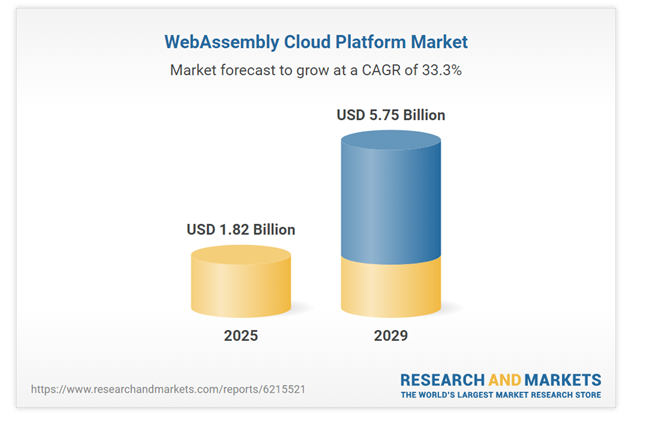
WebAssembly (Wasm) continues to expand what is possible in the browser. The WebAssembly market is expected to grow at a CAGR of 33% by 2029, driven by demand for high-performance web applications as per Research and Markets. Here is how Wasm is impacting front-end development.
Near-native performance
Wasm runs code at near-native speed, making it suitable for computationally intensive tasks like image/video processing, CAD tools, gaming, and real-time data visualization.
Multilingual support
Wasm supports programming languages like C, C++, Rust, and Go. This allows teams to bring existing codebases to the web without complete rewrites.
WASI (WebAssembly System Interface)
WASI extends WebAssembly beyond the browser, enabling server-side and edge computing use cases. This makes Wasm a truly universal runtime.
Real-world adoption
Figma, Google Earth, AutoCAD, and Photoshop web all use WebAssembly for performance-critical features, proving its production readiness.
WebAssembly is not replacing JavaScript used in developing websites — it complements it. Use Wasm for performance-critical modules while keeping your UI layer in JavaScript or TypeScript.
Now, let us move on to how serverless and edge computing are reshaping front-end infrastructure.
9. Serverless and edge computing
Serverless computing and edge architectures are reshaping how front-end developers think about infrastructure. The serverless market is projected to grow to $9.41 billion by 2032 (Fortune Business Insights). Here is what to consider.
Edge-first architecture
Platforms like Vercel Edge Functions, Cloudflare Workers, and Deno Deploy run code at the network edge. This reduces latency by serving responses from the closest data center to the user.
Cost efficiency
With serverless, you pay only for the computing resources you use. This can lead to 60-80% cost savings compared to traditional always-on servers for variable-traffic applications.
Hybrid rendering
Modern frameworks support mixing rendering strategies — static generation, server-side rendering, and edge rendering — on a per-page or per-component basis.
Database at the edge
Solutions like PlanetScale, Turso (libSQL), and Cloudflare D1 bring data closer to users, complementing edge computing for truly global low-latency applications.
With the infrastructure side covered, let us now explore how CSS itself has evolved and what new capabilities are available to front-end developers in 2026.
10. CSS trends and modern styling
CSS has undergone a renaissance in recent years, and 2026 brings powerful new capabilities that reduce the need for JavaScript-based solutions. Here are the top CSS trends transforming front-end design.
CSS nesting (native)
Native CSS nesting is now supported in all major browsers, reducing the need for preprocessors like Sass for basic nesting.
CSS container queries
Style components based on their container’s size rather than the viewport. This is essential for building truly reusable components in a design system.
View transitions API
The View Transitions API enables smooth, animated page transitions with minimal JavaScript. It creates SPA-like experiences even in multi-page applications.
Tailwind CSS dominance
Tailwind CSS continues to dominate the utility-first CSS space, with its JIT compiler and component-friendly approach making it the most popular CSS framework in 2026.
11. Web accessibility compliance (A11Y)
Web accessibility is becoming legally mandated. The European Accessibility Act (EAA) took effect on June 28, 2025, requiring digital products and services to meet accessibility standards. Here is why A11Y should be a core part of your front-end strategy.
Legal compliance
Beyond the EAA, the ADA (US), AODA (Canada), and EN 301 549 (EU) impose accessibility requirements. Non-compliance can result in lawsuits and fines — web accessibility lawsuits in the US exceeded 4,000 in 2024.
WCAG 2.2 standards
Target WCAG 2.2 Level AA compliance at minimum. New success criteria include focus appearance, dragging movements, and accessible authentication.
Automated testing integration
Integrate tools like axe-core, Lighthouse accessibility audits, and Pa11y into your CI/CD pipeline for continuous accessibility monitoring.
Business impact
Approximately 16% of the global population experiences some form of disability. Accessible websites expand your addressable market and improve usability for all users.
Baking accessibility into your development process from day one is far more cost-effective than retrofitting later.
12. Voice User Interfaces (VUI)
Voice User Interfaces are transforming how users interact with web applications. With over 4.2 billion voice assistants in use worldwide (Statista, 2025), voice-enabled web experiences are a growing front-end trend. Here is what to consider with VUI.
Web Speech API
Leverage the browser’s built-in Web Speech API for speech recognition and synthesis without third-party dependencies.
Natural Language Processing (NLP)
Implement NLP to make voice interfaces conversational and context-aware, going beyond simple command recognition.
Multimodal interfaces
The best VUI implementations combine voice with visual feedback, allowing users to speak or type interchangeably.
Accessibility enhancement
VUIs significantly improve accessibility for users with motor disabilities, visual impairments, or those using hands-free devices.
Now that we have covered voice interactions, let us explore how motion UI and micro-interactions can elevate your user experience.
13. Motion UI and micro-interactions
Motion UI and micro-interactions continue to differentiate exceptional front-end design from ordinary ones. They guide attention, provide feedback, and create emotional connections with users. This is the kind of detail a specialist UI/UX design company builds into every interaction layer. Here is how to make the most of these trends.
Purpose-driven animation
Every animation should serve a purpose — guiding users, confirming actions, or indicating state changes. Avoid gratuitous animation that adds visual noise without value.
Animation libraries
Use libraries like Framer Motion (for React), GSAP, and CSS animations to create smooth and performant transitions.
Scroll-driven animations
The new CSS Scroll-Driven Animations API enables scroll-based animations without JavaScript, improving performance and reducing complexity.
Moving ahead, let us discuss how GraphQL is changing the way front-end applications fetch data.
14. GraphQL adoption
GraphQL continues to gain traction as an alternative to REST APIs, with adoption growing to 29% of API developers (Postman State of APIs Report). However, 2026 brings a more nuanced perspective on when to use it. Here is what you should know.
Efficient data fetching
GraphQL eliminates over-fetching and under-fetching by letting clients request exactly the data they need in a single query.
Strongly typed schema
GraphQL schemas are self-documenting and strongly typed, providing better API documentation and enabling powerful developer tooling.
When to use (and when not to)
GraphQL excels for complex, relationship-heavy data with multiple consumer types. For simple CRUD APIs with single consumers, REST remains simpler and more cacheable.
Federation and supergraphs
Tools like Apollo Federation enable teams to compose multiple GraphQL services into a unified API layer — essential for microservice architectures.
Finally, let us explore one of the most exciting frontiers in front-end development — augmented and virtual reality on the web.
15. Augmented Reality (AR) and Virtual Reality (VR)
AR and VR technologies are pushing the boundaries of front-end web development, creating immersive browser-based experiences. The global AR/VR market is projected to reach $58.3 billion by 2028. Here is what you need to know.
WebXR API
The WebXR Device API enables VR and AR experiences directly in the browser without plugins or app downloads.
Frameworks and tools
Use A-Frame, Three.js, and Babylon.js to build 3D and immersive content. A-Frame provides a declarative HTML-like syntax that lowers the entry barrier for front-end developers.
E-commerce applications
AR is particularly impactful in e-commerce — virtual try-on for fashion, furniture placement visualization, and 3D product previews are driving higher engagement and conversion rates.
Performance considerations
Immersive experiences require significant processing power. Optimize 3D assets, implement level-of-detail (LOD) techniques, and use progressive loading for AR/VR content.
The Future of Front-End Development Starts with Strategic Execution
Front-end development continues to evolve rapidly, and 2026 reinforces one clear reality: innovation must be intentional. The trends discussed above, including AI-assisted engineering, TypeScript-first development, Core Web Vitals optimization, edge computing, and accessibility-first design, reflect a more mature and performance-focused ecosystem.
Success in this landscape is not about adopting every new tool. It is about building a scalable, measurable, and user-centric digital foundation.
The most successful front-end teams in 2026 will:
- Use AI-powered tools to increase productivity while maintaining strict code governance
- Treat performance optimization as a continuous process, not a one-time task
- Build accessibility into design systems and component libraries from the start
- Select frameworks and architectures based on long-term scalability and maintainability
- Standardize TypeScript adoption to improve reliability and reduce technical debt
Whether you are experimenting with evolving front end technologies like WebAssembly and WebXR or strengthening core areas such as responsive design and performance engineering, the opportunity lies in thoughtful implementation.
Turn Modern Front-End Trends Into Business Impact with Monocubed
Adopting new front end technologies is only valuable when they translate into better user engagement, faster time to market, and stronger conversion performance. That is where Monocubed delivers impact.
As a front-end development company focused on performance-driven digital products, we help startups, SaaS companies, and enterprises implement modern technologies in a structured and results-oriented way.
Our approach to modern front-end implementation
AI-integrated development workflows: We incorporate AI-assisted tools into disciplined engineering processes to accelerate development cycles without compromising architecture or code quality.
Performance-first engineering: Our frontend development team optimizes applications around Core Web Vitals benchmarks using modern rendering strategies such as SSR, SSG, and edge delivery models to ensure speed and scalability.
Type-safe and scalable architecture: We implement TypeScript-first codebases and modular component-driven structures that simplify maintenance, reduce production issues, and support long-term growth.
Build future-ready front-end systems: From micro-frontends to scalable design systems, we build flexible architectures that evolve alongside your product roadmap.
Front-end excellence is no longer optional. It is a competitive advantage. If you are planning to build or modernize a high-performance web application, our front-end specialists can help you transform emerging trends into measurable results. Connect with our team to discuss your project, explore our front-end development services, or hire dedicated front-end developers to accelerate your digital growth.
Need High-Performance Front-End Development?
We design and develop responsive, accessible, and SEO-optimized web applications that enhance user experience and accelerate digital growth.
FAQs About Front-End Development Trends
-
What are the top front-end development trends in 2026?
The top front-end development trends in 2026 include AI-powered development tools, TypeScript standardization, Core Web Vitals optimization, modern framework evolution such as React 19, Next.js 15, Svelte 5, and Astro, progressive web apps, component-driven design systems, WebAssembly, serverless and edge computing, native CSS features, and web accessibility compliance. These trends focus on performance, developer experience, and building inclusive web experiences.
-
Which front-end framework should I learn in 2026?
The best framework depends on your project needs. React remains the most popular choice with the largest ecosystem and is ideal for large-scale applications. Next.js is the go-to meta-framework for production-ready web apps. Vue offers a gentle learning curve for progressive adoption. Svelte is excellent for performance-critical apps, and Astro is great for content-heavy websites. If you are just starting out, React or Vue are the safest bets. For a more detailed comparison, check out our guide on the best front-end frameworks.
-
How important is TypeScript for front-end development?
TypeScript has become the industry standard and front-end future. Adopting TypeScript helps reduce production bugs, improves team productivity, and makes large codebases easier to maintain. If you are working on anything beyond a small personal project, TypeScript is highly recommended.
-
What is the future of front-end web development?
The future of front-end development is shaped by several key shifts. AI-augmented development will handle more routine coding tasks while developers focus on architecture and user experience. Performance-first design will become even more critical as Core Web Vitals directly impact search rankings and revenue. Edge computing will bring rendering and logic closer to users for faster global performance. Accessibility will become a legal baseline rather than a nice-to-have. WebAssembly will also enable more powerful browser applications, from CAD tools to video editing platforms.
-
How can I improve my website’s Core Web Vitals score?
To improve your Core Web Vitals, focus on three metrics. For LCP (loading speed), optimize images with modern formats like WebP, implement lazy loading, and use server-side rendering. For INP (responsiveness), break up long JavaScript tasks, defer non-critical scripts, and use requestIdleCallback. For CLS (visual stability), set explicit dimensions on images and videos, avoid injecting content above existing content, and use CSS contain for dynamic elements. Tools like Google Lighthouse and WebPageTest can help you identify specific bottlenecks.

 All our projects are secured by NDA